(020) 27657648, 27650011 / info@iicmr.org
Innovative Pedagogies: Integrating Experiential Learning with Blended Teaching Strategies
Context:
In today's dynamic educational landscape, integrating experiential learning with blended-teaching strategies is crucial. Blended learning combines traditional classroom methods with online education, catering to diverse learning styles—visual, auditory, and kinesthetics—enhancing engagement and retention. Our approach begins with a three-day Compact Capsule program, offering students an overview of the semester's courses to spark interest and lay a solid foundation. Experiential learning deepens this by connecting theory to real-world applications through workshops, hands-on projects, and internships, fostering critical thinking, problem-solving, and digital literacy. Activities like fun fairs simulate business environments, imparting essential skills in market analysis, financial planning, and entrepreneurship. By emphasizing sustainability and social responsibility, these programs ensure students gain both academic and ethical proficiency. This holistic method prepares students for lifelong learning and adaptability, equipping them to navigate modern complexities while nurturing continuous growth and social responsibility. Together, these strategies offer a rich, effective, and future-ready educational experience.
Objectives:
- To provide a gist of the courses in advance to the students, develop interest in the courses.
- To create engaging and effective learning experiences by integrating diverse learning modalities, and to foster digital literacy and competence
- To develop creativity, critical thinking and problem-solving skills, communication, collaboration and teamwork skills among students through project-based activities.
- To develop Entrepreneurial Mindsets and Skills by equipping students with practical skills in business planning, financial literacy, and market analysis.
- To organize activities like fun fairs and workshops to simulate real-world business environments.
- To Integrate go-green initiatives to instil values of sustainability and social responsibility in business activities
Practice:
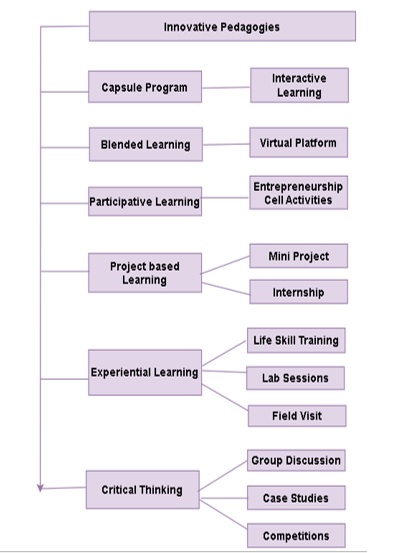
The MCA department's innovative approach combines experiential learning with blended teaching strategies to offer a rich and engaging educational experience. The academic year kicks off with a three-day Compact Capsule program, providing students with an overview of their semester's courses. This program introduces key concepts and emerging trends, sparking interest and laying a solid foundation for deeper learning. During the Compact Capsule, faculty employ a variety of innovative teaching methods, including multimedia presentations, interactive discussions, and hands-on activities. These approaches help students quickly grasp the essential ideas and set a robust foundation for their subsequent learning. To support this, faculty have developed and shared instructional videos that offer quick overviews of topics, allowing students to review and reinforce their understanding as needed. As the semester progresses, the use of blended learning continues to enrich the learning experience. Faculty integrate diverse multimedia resources into their lectures, tutorials, and practical sessions. This variety caters to different learning preferences—visual, auditory, and kinesthetics—ensuring that all students can engage effectively with the material. This inclusive approach ensures that all students can effectively engage with the course material. Online quizzes, assignments, and instant feedback mechanisms provide continuous assessment and support, allowing students to monitor their progress and deepen their understanding of complex concepts. Experiential learning is woven into the curriculum through hands-on projects and internships. These activities encourage students to apply theoretical knowledge to real-world scenarios, promoting critical thinking, problem-solving, and digital literacy. Each semester, students undertake mini-projects that challenge them to analyse problems, evaluate information, and devise creative solutions. These projects foster teamwork and communication skills, as students collaborate with their peers to achieve common objectives. The department further enhances learning by emphasizing entrepreneurship. Through its entrepreneurship cell, students are engaged in activities like fun fairs that simulate real-world business environments. These experiences provide practical insights into market analysis, financial planning, and strategic thinking, nurturing an entrepreneurial mindset and essential business skills. Sustainability and social responsibility are integral to our innovative pedagogies. Students are encouraged to participate in go-green initiatives and ethical business practices, helping them develop a strong sense of environmental stewardship and social accountability alongside their academic and professional skills. This comprehensive approach, combining innovative teaching methods with experiential learning, prepares students for lifelong learning and successful careers. It equips them with the skills and mindset needed to navigate the complexities of the modern world, fostering continuous personal and professional development.
Evidence of Success:
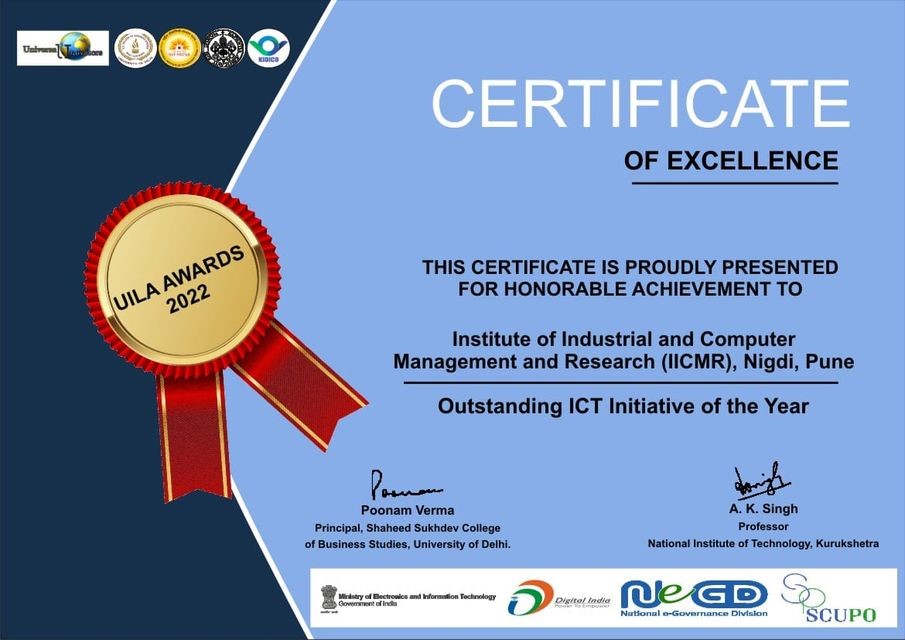
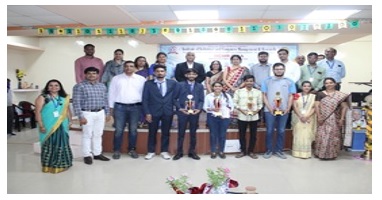
The shift to purely online learning during the pandemic highlighted significant challenges, especially in developing conceptual understanding and practical skills. These gaps were effectively addressed through our innovative pedagogies, which blend hands-on, experiential-learning with modern teaching strategies. This approach has enabled students to better grasp complex concepts and apply their knowledge in real-world contexts. Quantitative feedback underscores these positive outcomes. Students report a deeper understanding and improved application of the material compared to their previous online-only experiences during their undergraduate studies. The use of instructional videos, online quizzes, and instant feedback mechanisms has facilitated accurate tracking of their learning progress, resulting in a more robust conceptual grasp and practical competency. Participation in project-based learning and entrepreneurial activities has significantly boosted student confidence and teamwork abilities. These experiences have equipped them with essential skills such as problem-solving, strategic planning, and business acumen, which they have effectively utilized in internships and professional environments. Our emphasis on integrating sustainability and social responsibility into the curriculum has been recognized with increasing student engagement in go-green initiatives and ethical practices. This commitment was honoured with the Outstanding ICT Initiative of the Year award from Universal Innovators Leadership Awards in 2022, highlighting the innovative impact of our educational practices.
Problems Encountered :
- Adapting to Innovative Pedagogies: Faculty accustomed to traditional classroom settings faced difficulties integrating diverse teaching methods, including online platforms and experiential learning approaches.
- Sustaining Engagement and Motivation: Maintaining student interest and motivation in the varied components of innovative pedagogies, such as blended and hands-on learning, presented significant challenges.
- Designing Effective Assessments: Developing assessment methods that accurately align with the intended learning outcomes and cater to the diverse nature of these pedagogies was complex.
- Coordinating and Scheduling: The intricate planning and scheduling needed to integrate project-based learning, entrepreneurial activities, and regular coursework demanded extensive effort and coordination.
Necessary Resources:
- Robust Digital Infrastructure: Reliable internet access and suitable devices are essential to support multimedia learning resources and online components effectively.
- Comprehensive Technical Support: Providing ongoing assistance to address technical issues related to digital tools and online learning platforms is crucial for both faculty members and students.
- Faculty Development Programs: Continuous professional development through workshops and training is necessary to enhance faculty’s ability to implement and adapt to innovative pedagogies effectively.
- Student Support Services: Resources are required to help students navigate diverse learning modalities, access digital materials, and resolve any technical difficulties.
- Pedagogical Guidance: Access to expert guidance and resources for designing and implementing blended and experiential learning activities and assessments that promote active and engaged learning.
Outstanding ICT initiative award (Universal Innovators Leadership Awards - 2022)
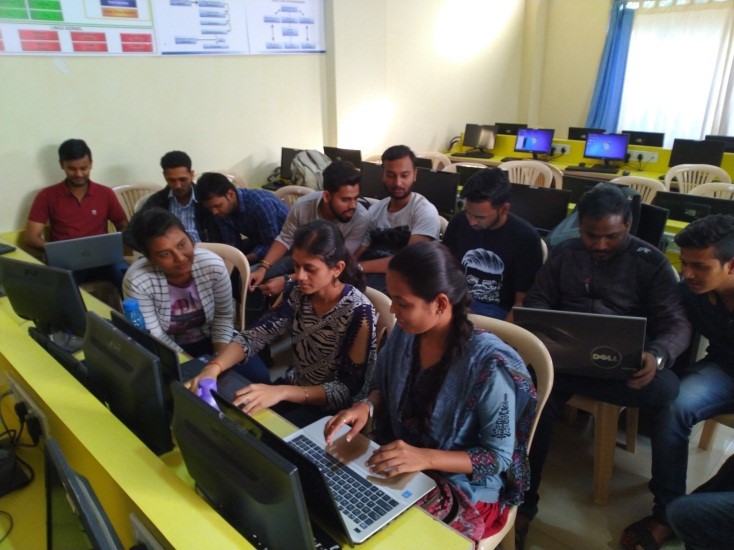
Compact Capsule Program
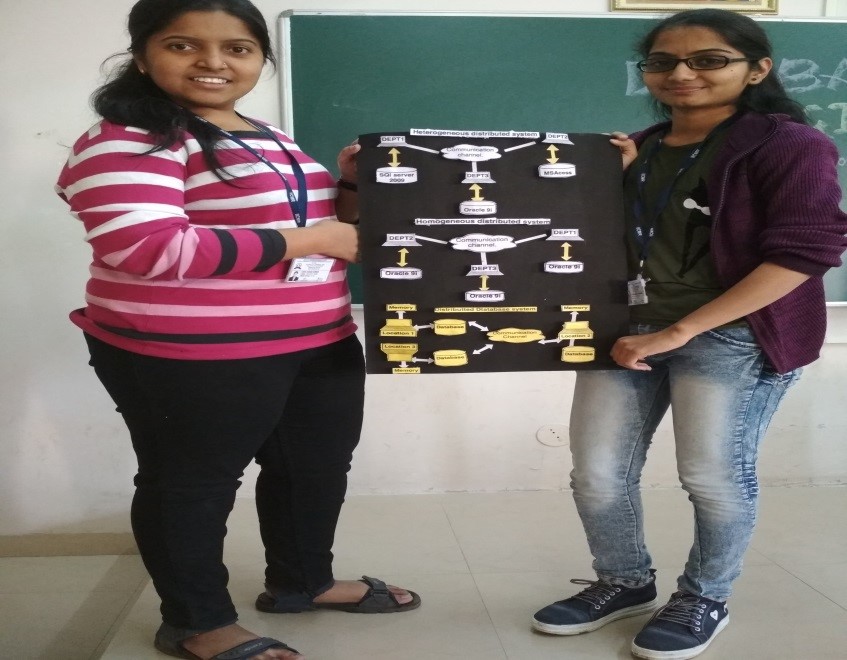
Capsule Program for subject ‘Advance DBMS’
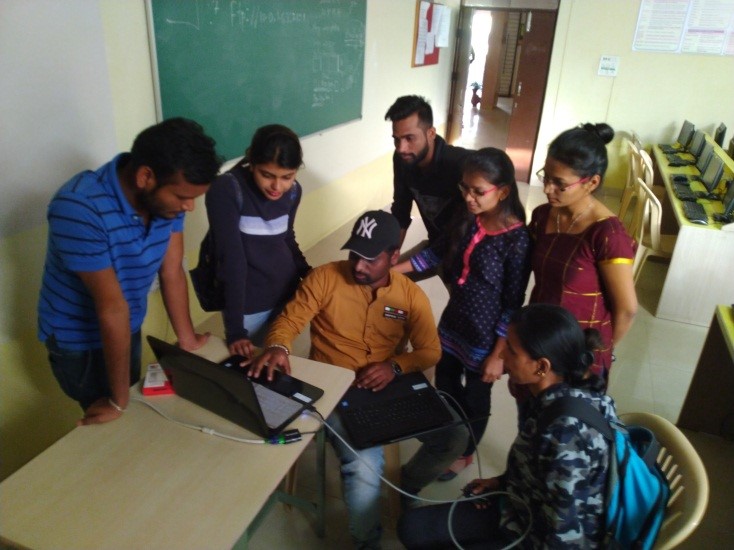
Experiential Learning
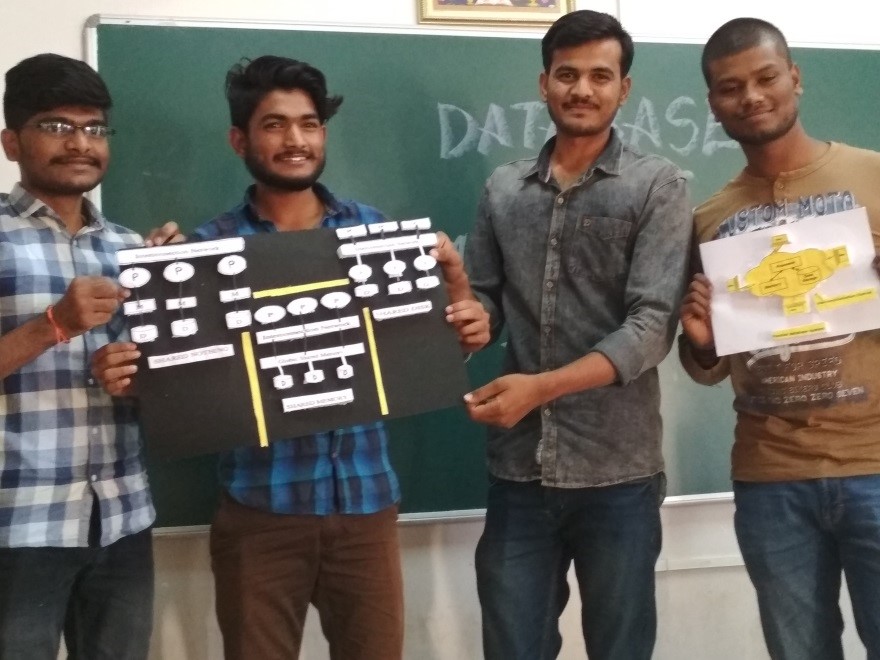
Critical Thinking
Xmind: Mind mapping tool


Blended learning Tools used during teaching-learning
Padlets

Mentimeter and Socrative for conducting Quiz
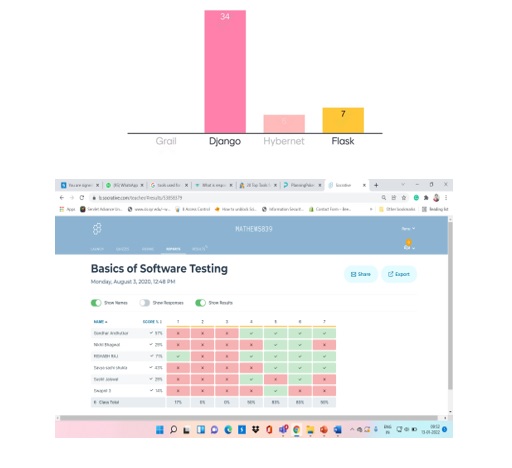
Participative Learning
Entrepreneurship Cell Activities
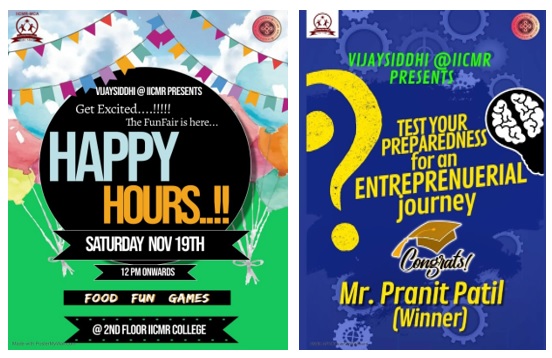
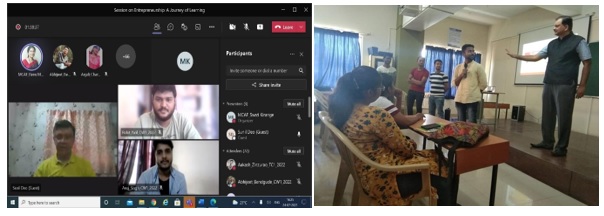
Orientation on Entrepreneurship development
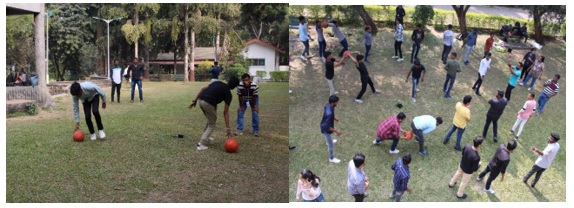
Field Visit: Team-Building Activity
Eksandh -Corridor of Unity
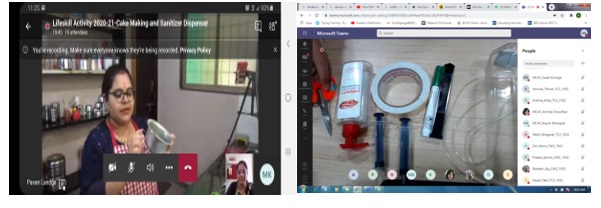
Developing Problem Solving and creative thinking skills through Cake Making and Sanitizer Dispenser Life skill Activity
TechnoCase: State Level Competition
State-Level Budding Consultants: Case Study
Code Battle: Programming Competition
Blended Learning: Student Engagement approach
Context:
Blended Learning is a fusion of learning methods that incorporate multiple teaching models. It optimizes the achievement of learning objectives with the application of appropriate learning technologies to match the personal learning style. Blended learning approach helps to design teaching programs in a way that knowledge reaches to visual, auditory, and kinetic learners effectively. The correct blend of technologies, help to improve teaching, information retention, engagement, responsibility, and enjoyment. Blended learning is important no matter what the industry is, from schools to corporations, from all walks of life.
Objectives:
- To boost learner’s efficiency of learning
- To improve communication, build stronger relationships among students and teachers
- To keep track of student’s progress at any given time and to better understand their strengths and weaknesses
- To enable students to learn at their own pace
Practice:
The department has incorporated the use of blended learning tools in teaching -learning process from daily lectures, tutorials, practical to every activity conducted to enhance learning experiences.
Outcome:
- Helped to boost active learning
- Improved span of concentration in online classes
List of ICT Tools used for Teaching Learning:
| Sr.No | ICT Tool | Purpose | Source | Course |
|---|---|---|---|---|
| 1 | LMS-vmedulife ERP System | ERP system is used for assessment and evaluation , notes video Sharing | vmedulife Software Services | For all courses |
| 2 | MS Team | For conducting Sessions online mode | Log In | Microsoft Teams | For all courses |
| 3 | You Tube | Used for posting videos materials of Lectures prepared by course teacher | YouTube | For all courses |
| 4 | visualgo | Used for showing data structure operation performed, using visual / animation | visualising data structures and algorithms through animation – VisuAlgo | Data structure and Algorithms |
| 5 | Data Structure Visualizations | Used for showing data structure operation performed, using visual / animation | Data Structure Visualization (usfca.edu) | Data structure and Algorithms |
| 6 | SPSS | Used to teach statistical data analysis | SPSS Software available in Computer lab | Research Methodology course |
| 7 | Padlet | For making session interactive with group/ individual activities | Dashboard | Padlet | For all courses |
| 8 | Mentimeter | Used for conducting Quiz | Interactive presentation software – Mentimeter | For all courses |
| 9 | Kahoot | Used for conducting Quiz | Kahoot! | For all courses |
| 10 | Socrative | Used for conducting Quiz | Socrative | For all courses |
| 11 | Xmind map | It is mind mapping and brainstorming tool, used to generate innovative ideas, inspire creativity | MindMup , Xmind – Mind Mapping Software | For all courses |
| 12 | planningpoker | Used for teaching how you can plan any project/game | PlanningPoker.com – Estimates Made Easy. Sprints Made Simple. | For all courses |
| 13 | Jamboard | Used for virtual board. Students and teachers both can write and share their ideas. | Google Jamboard | For all courses |
| 14 | Github | Used for sharing project /Code with teacher and team members | GitHub | Programming courses, Mini/Major Projects |
| 15 | HackerRank | Used for programming assignments, for developing problem solving skill and logic | HackerRank | Programming courses |
| 16 | Codechef | Used for programming assignments, for developing problem solving skill and logic | Competitive Programming | Participate & Learn | CodeChef | Programming courses |
| 17 | DELNET | Used for e-Resource like journals, Research papers | Search Home (delnet.in) | Research Methodology course |
| 18 | National Digital Library of India (NDLI) | Used for e-Resource like journals, Research papers | National Digital Library of India (iitkgp.ac.in) | Research Methodology course |
| 19 | EBSCO | Used for e-Resource like journals | Choose Databases: EBSCOhost | Research Methodology course |
Capsule Program
Context:
Syllabus set by the University has to be completed successfully within the given semester. It was observed that to build students interest it is required to give them the overall idea of the course by telling them the importance, its applications and some hands on if required related to the select topics in the course. Also the current trends related to the course are explained. This makes them understand within a limited time, what exactly the course is about and what they will be learning in the semester.
Objectives:
- To provide outline of course (subject) in advance
- To explain the Course outcome by conducting select topics /practical to get them a feel of the course (subject)
- To develop interest among students for the course (subject)
Practice:
MCA department starts the academic year with 3 days compact capsule program for students. Under this program select topics, key points and the emerging concepts and trends for every course in the semester is taught within 3 days to get an overall idea and to develop their interest in that course.
Outcome:
- Schedule
- Plan
Meditation
Context:
Anapana is the first step in the practice of vipassana meditation. Anapana means observation of natural, normalrespiratio, as it comes in and goes out. It is an easy to learn objectve and scientific technique that helps develop concentration of the mind.
Objectives:
- To help in developing concentration of the mind
- To help in dealing with the fears, anxieties and pressures
- To help in increasing sself-confidence and abiity to express oneself
Practice:
MCA department practices Anapana meditation during the first 10minutes of first session everyday.
Outcome:
- Increased concentration of the mind
- Improved awareness and alertness of mind
- Increased self-confidence
- Better Performance in studies, sports and extra-curricular activities
Weekly Quiz(Quizzomania)
Context:
Having a strong technical knowledge as well as general knowledge is a necessity to be in this competitive world.
Objectives:
- To improve and expand one’s knowledge of things, either general or in specific area.
- To promote a fun way to study and in the process help improve one’s general knowledge.
- To motivate the students to participate in quizzes by awarding them with certificate and awarding them with star of the week and star of the month award.
Practice:
The Quizzomania activity is divided into 5 types of quiz.
- Tech- Mania
- Code- Mania
- News- Mania
- Apti- Mania
- View- Mania
Outcome:
- Increased participation in co-curricular activities.
- Creates a fun as well as competitive environment.
- Improves general knowledge.
- Enhances Aptitude skills.
Click here for more details
Do It By Yourself
1) Do It Yourself : Model making
Context:
Having a strong technical knowledge as well as general knowledge is a necessity to be in this competitive world.
Objectives:
- To improve and expand one’s knowledge of things, either general or in specific area.
- To promote a fun way to study and in the process help improve one’s general knowledge.
- To motivate the students to participate in quizzes by awarding them with certificate and awarding them with star of the week and star of the month award.
Practice:
The Quizzomania activity is divided into 5 types of quiz.
- Tech- Mania
- Code- Mania
- News- Mania
- Apti- Mania
- View- Mania
Outcome:
- Increased participation in co-curricular activities.
- Creates a fun as well as competitive environment.
- Improves general knowledge.
- Enhances Aptitude skills.
Click here for more details
Flagship Events
1) TechnoCase
Objectives:
- To inculcate the problem solving ability amongst the students which will help them in their IT career.
- To understand real time challenges in business.
- To propose technical solution for the challenges.
Practice:
The competition is conducted in two streams.
- C/C++ Competition for under graduate students to challenges their logical ability and conceptual understanding.
- Case study Competition for post graduate students to challenge their problem solving ability through innovative solutions for business problems & opportunities with the use of pertinent technology
- Project Competition to present before their product and get the suggestions from the experts.
Outcome:
- Showcasing ideas & logical ability to Industry experts have helped students in getting placement opportunities.
- The competition is being conducted for last 8 years which proves its popularity and acceptance among students.
2) IT-Conclave
Objectives:
- To develop Business Perspective among IT students with a view to strengthen their capabilities through interaction with various Industry Experts.
- To enlighten students on scope for entrepreneurship.
- To create awareness about trends in technology, work –life culture and various career paths.
- To make the students aware of the technical and soft skills required to build a sustainable career in IT.
Practice:
The competition is conducted in two streams.
- Identifying resource person from diverse domains from IT Industry.
- Sessions on niche technologies.
- Panel Discussion aimed at deliberating on the myths and realities IT industry holds and to channelize student’s efforts to make the transition from academia to industry easier.
Outcome:
- Gives students a birds eye view of all the career options available and the work life culture, thus making it easier for students to choose the best path suitable.
- Introduction & awareness of niche technologies among students.
Click here for more details
Value added Add- on Courses
Context:
Making students more confident by providing the hands on training in the area of their interest and as per the needs of industry.
Objectives:
- To provide training on latest technology.
- To make students more employable.
- To bridge the gap between Industry and Academia.
Practice:
Selection of the students as per their interest through the entrance test. Giving them the training on International certifications by the certified trainer / expert .Following are the International certification /training programmes being conducted, where newer courses would be added as per the feedback received from various stakeholders.
- AWS Cloud Practitioner
- AWS Solution Architect
- Microsoft Security Fundamentals
- Microsoft Azure Fundamentals( AZ 900)
- Microsoft Power Platform Fundamentals (PL 900)
- JLPT (Japanese Language Proficiency Test) N5
- OCJP certification Training Program
- Oracle MTP Certification Program
- ISTQB Certification Program
- Salesforce Certification Program
- Business English Training Program
- Laptop repairing and maintenance program
- Mobile repairing program
Outcome:
- All certified , trained students got placement in good IT companies.
- Placement Ratio increased.
List of add on course completed/ going on...
Language Lab
To develop student’s proficiency in English communications, they are trained in well equipped computerized.Language Laboratory.Students are given training in language skills like listening, reading, writing and speaking where they get an opportunity to improve their pronunciation and communication skills.In Every Semester, we focus on different aspects such as English Grammar, Vocabulary, Language Skills,Soft Skills, Presentation Skills, and Interview Skills etc. Language Lab is a Self Learning Activity where students take advantage of the lab and do practice of learning English.It aims at confidence-building among students for interactions and presentations in English.
The main objectives of the Language Laboratory are:
- To equip the students with good communication skills – speaking, listening reading and writing.
- To emphasize the need of English in the technical world.
- To prepare them for interviews and future job environments.
- To train the students in the art of conversation and discussion with the help of various language lab software, apps and websites.
Remedial Coaching
Students come from diverse background with different learning capacity. They differ in learning skills,academic performance and grasping levels. Learning support is provided to students by providing specialcoaching.To develop the learning capabilities teaching process is designed to cater with individual students requirement. Faculties understand the difficulty level in different subjects and accordingly they design the syllabus for remedial classes.These individual support help student to build their confidence, positive ,attitude, learning skills, problem solving skills etc., which train them for future exams and careers.
- Remedial classes for the slow learners in particular subject identified according to their mid-term exam performance.
- Sessions are conducted to develop specific competencies of the students that may contribute to their academic and professional success.
- Remedial coaching for exam orientation which contribute to their academic success through concept clarification and problem solving exercises.
- Classes are conducted by respective faculty members for students who face difficulty in their subject domain. Remedial classes are conducted after 4.00 pm to clear their doubts and guide the students for better preparations for University exams.
- Simplified notes and easy techniques are provided to the students.
Bridge Course
Bridge courses are designed to cater the needs of students belonging to diverse backgrounds and having different learning capabilities.
The objectives of conducting bridge courses are as follows:
- To provide training on pre requisite topics for a particular course.
- To make students confident to learn the course.
- To bridge the gap between SPPU syllabus and prerequisite topics.
Experiential Learning
Context:
Students generally acquire limited knowledge through lectures in class rooms and do not always expose to real life situations. The adoption of experiential learning, as a way to build practitioner skills and facilitate the move from theory to practice will positively impact the students. Governments across the globe are highly recognizing the positive impact of new businesses on the employment levels and other social and economic growth which plays an important role in bringing up the society. India being a developing country needs more successful young entrepreneurs. Entrepreneurship development is an integral part included in the curriculum to enhance the scope for self-employment. This practice is initiated to promote entrepreneurship and to inculcate entrepreneurial skills from various dimensions among the students.
Objectives:
- To develop real-world skills that will help students to lead exceptional lives in a rapidly changing world as self-reliant individuals.
- To mentor the students in order to acquire strategic thinking, planning, branding, marketing and networking skills.
- To develop synergistic team spirit and to inspire the team members to live in harmony.
Practice:
Entrepreneurial skills encompass broad range of skill sets like technical skills, strategic thinking, planning, branding, marketing and networking skills, teamwork, leadership with business management and creative thinking. The motive behind this initiative is make students experience the primer of entrepreneurship. The institute conducts three activities through which the skills can be inculcated among the students.
Outcome:
The active participation in these activities helped to boost confidence among students and enable them to work as an effective team member. The initiative has helped to make students understand how important it is to know the nitty-gritty of businesses. It is an effort towards developing competent professionals. Many organizations have given placements to the students. Students have developed multi skills through the field experiences. They are able to apply theoretical knowledge in practical situations through their problem-solving competencies and analytical skills. With few years of experience of working with corporate our students have become entrepreneurs leading the way forward.
IICMR - MCA Copyright© 2023 All Rights Received.